Showing posts with label Culture and Heritage. Show all posts

Saturday, November 2, 2024

Wangduechhoeling Palace Museum and Cultural Centre

For all the serenading we do in praise of our monarchy, our tradition and culture and architectural aesthetics, the shallowness of it became all too evident when not a single Bhutanese had the sense of national pride to stand up and object to the construction of the grotesque Amankora Bumthang Lodge in the vicinity of Wangduechhoeling Palace – a national edifice without compare. I was pained enough to blog about it in 2011.

A reader from abroad reacted as follows:

Hello Yeshey,
“……  The problem of the Jakar Amankora hotel forces me to speak up, however.

For all the talk about protecting Bhutan's culture from foreign influence and controlling the negative impacts of tourism, this is a major, tangible contravention.

There are ways to ensure that if a structure as special as Wangdicholing Palace were to have a development project proposed in its vicinity, it would not be adversely affected. The Amankora hotel, which leaves Wangdicholing Palace literally in its shadow, is clearly out of harmony with its historic context…….”

The blemish of insult notwithstanding, the historic Wangduechhoeling Palace is now a museum dedicated to the Wangchuck Dynasty – its Tashi Rabney was conducted on the 30th of October, 2024.

Wangduechhoeling Palace Museum and Cultural Centre
Photo: Kuensel 31st Oct., 2024

Through this blog I would like to offer Thanks to Bhutan Foundation who thought of it, and spent many years and millions of dollars working on the Palace. Their act of preservation – I chose not to call it restoration – has been remarkable – the result is there for all to see. We must also Thank the selfless donors who assumed the responsibility in which we Bhutanese had failed miserably. I had the good fortune to meet many of them during the Tashi Rabney ceremony. Ofcourse, few of them I had met many decades earlier.

Tashi Rabney of the Museum

Wangduechoeling Palace was built by Choetse Poenlop Jigme Namgyel – sometime during 1858/1859 – after the amicable settlement of the Battle of Shamkharthang with Jakar Dzongpoen (later Jakar Poenlop) Tsundru Gyaltshen. Most know that Choetse Poenlop Jigme Namgyal is the progenitor of the Wangchuck Dynasty – but few know that he is equally important as the man who successfully reunified Sharchog Khorlo Tsipgye in 1850 – when he served as the Trongsa Droenger under the then Trongsa Poenlop Wangchen Dorji (Tshoki Dorji).

Our first Monarch – Gongsar Ugyen Wangchuck was born in this Palace.

For some inexplicable reason, I refrained from taking even a single frame of photograph during the entire day of the Tashi Rabney – not of the people, nor of the Palace or the rare artifacts that were on display inside. I do not know - perhaps it was a subconscious way of showing reverence to the sanctity of the occasion, or it may have been a sense of joy and happiness that the bastion of the Wangchuck Dynasty has been reinstated to its rightful place in history.

Sunday, November 6, 2022

Thaa Damtsi

Hi ……..,

Thank you for your mail of the morning.

On the outset I would like to apologize to you and your organization for the shameful behavior of my country towards donors who have helped make a difference in the lives of the Bhutanese people. The rule regarding donors or their hosts in Bhutan needing to pay the SDF of US$200.00 per day per person is an act of shamelessness, ingratitude and total lack of appreciation for the generosity of the donors and their untiring work to raise funds for meaningful projects in Bhutan.

Popy photographed in Merak, Trashigang

Unfortunately the Bhutanese people have no idea how much hard work goes behind fund raising that donors have to do - to be able to deliver much needed aid money to Bhutan - they only see the color of the money that come in - not the passion and commitment and hard work that go behind the humanitarian work.

As a aid worker myself who had to deal with aid recipients on a daily basis, I had on countless occasions been faced with attitudes that were so utterly callous - it defies logic that a society supposedly made up of people indoctrinated in, what we in Bhutan call, people of “Thaa Damtsi” - "Loyalty", "Integrity", "Virtue, "Interpersonal Commitment", "Respect & Reciprocity" etc. - can be capable of. In exasperation, after eleven years in an aid giving organization, I threw in the towel and made my exit, before I too am dragged into the cesspool.

I totally agree with you - there are many developing countries around the world that are deserving of your aid money. You would be right in reassessing your work here in Bhutan. All that I can say on behalf of the people of Bhutan and on my on behalf is: THANK YOU - for your engagement thus far.

The truth is that I am a Bhutanese and I will remain one to the end of my life - it is not a dye that I can wash off, nor a cast that I can peel off and discard - not that I wish to. Thus, as a caring Bhutanese, I raise my voice once in a while; put in few words edgeways - in the hope that I might make a difference.

For the selfless donors who have suddenly been declared persona-non-grata, I can do nothing - other than regularly remain in touch with them from time to time and ask: How are you? Are you and your family keeping well and safe from the pandemic? One other thing I do:

First thing I wake up in the morning, I login into the website:

https://www.worldometers.info/coronavirus/

I scan through the site and see how countries such as Australia, Canada, England, India, Japan, Malaysia, South Korea, Sweden, Taiwan, the Middle East and the USA are faring, with respect to the COVID-19 Pandemic that is still a looming threat. I do so because I hold memories of people in those countries who helped me do good in this world - people who still continue to mean well for Bhutan and the Bhutanese people, regardless.

Every once in a while I make sure that I remember to write to each of them in those countries - to demonstrate to them that atleast there is one solitary Bhutanese whose heart has not stopped palpitating for them, in gratitude for having given to the Bhutanese people so selflessly.

Bye and take care ---- and once again I am sorry.

Yeshey

Saturday, September 7, 2019

Viewshed Analysis

This morning I woke up to find that someone was online reading my article that I had posted 8 years back. I too went to read what I had written. I find that what this reader wrote was meaningful.

Bhutan has some stunningly beautiful architectural monuments. Unfortunately I have been pained to see electrical wires and lamp posts and other ugly structures coming up in and around the structures that spoil the view. I think time has come for us to consider "Viewshed Analysis".

The following was in response to my Blog post on the construction of the ugly Amankora Resort next to the heritage site: Wangdicholing Phodrang:

https://yesheydorji.blogspot.com/2011/06/normal-0-false-false-false_16.html

------------------------------------

Hello Yeshey,

I am afraid I come across as a know-it-all whenever I comment on issues in Bhutan as I have spent mere months there. So, I usually keep my thoughts to myself although I am a follower of your blog and I read each post! The problem of the Jakar Amankora hotel forces me to speak up, however.

For all the talk about protecting Bhutan's culture from foreign influence and controlling the negative impacts of tourism, this is a major, tangible contravention.

There are ways to ensure that if a structure as special as Wangdicholing Palace were to have a development project proposed in its vicinity, it would not be adversely affected. One process would be 'viewshed analysis' which is simply considering the potential visual impact of the proposed development on the historic structure and landscape. The Amankora hotel, which leaves Wangdicholing Palace literally in its shadow, is clearly out of harmony with its historic context. I realize that local administrators in Bhutan don't have access to trained experts and funds to deal with landscape preservation but the monolithic hotel should have been permitted only in a less obtrusive part of the valley.

Since development is happening at such high speed here in my country, we have many processes in place to protect significant structures and landscapes although they don't always succeed. My work now is related to protecting archaeological sites from construction works. I'm working as a civil servant with the Ministry of Culture here in my home province.

Anyway, for whatever reason, I feel extremely inspired and motivated to contribute however I can to the management and protection of Bhutan's historic sites. I hope I can return and do some good work in this area, share what I've learned, maybe even train others. I've had the opportunity for education and experience in this uncommon field, in a setting of rapid development. Nobody in Bhutan right now has this background. I understand and appreciate why there's a continuing backlash against "foreign experts" and I know that non-nationals aren't easily employed in Bhutan (unless sponsored by an NGO, which is my hope) so it would be very difficult to make this happen. But, dreams are not supposed to be simple to achieve, right?

Anyway, thanks for reading all that. I hope you are well and I look forward to your continuing posts and photos.

Take care
------------------------------------

Wednesday, October 26, 2016

Shame on UNICEF & Aamir Khan II

In less than 3 days, my article titled “Shame on UNICEF & Aamir Khan” generated a staggering 30,507 pageviews. The visitors, broken down by countries, were as follows:

Bhutan                          23,229
India                               4,145
United State                   2,747
Australia                        1,696
Thailand                            692
Nepal                                 480
United Arab Emirates        346
Malaysia                            265
France                                179
United Kingdom                158

But what was even more extraordinary was the quality of comments generated by the post. The post generated 68 comments – sadly, most of these comments missed the point I was trying to make.

My post wasn't about what Aamir Khan was wearing – I wouldn't give two hoots what he was wearing - it had to do with when and where he was wearing what.

As members of the civilized human society, we are expected to behave and conduct ourselves within the bounds of civility. Those who choose to live outside the boundaries of social norms, and those who behave with lawlessness and disregard all that keep the human society civilized and orderly, they have no right to claim to belong to a civilized society.

Dresses certainly do not make the man – but knowing how to dress and what to dress, given the occasion, distinguishes him from the uneducated and the depraved.

Underpants is an acceptable clothing under certain circumstances; in some occasions and places, nothing but swimsuits are acceptable – Hawaiian shirts are standard apparel for beach side walks – being suitably clad for the occasion is what sets the humans apart from the animals.

Aamir Khan is nothing more than a flash-in-the-pan and his two days’ visit is inconsequential. He brings no value to Bhutan or the Bhutanese people.

What I am upset about is his insensitivity and his total disregard for the country’s rules. If he didn't know, he should have asked and if he didn't ask, his promoters should have told him.

He and his promoters – the UNICEF – have paid scant regard to the established rules and decency that every Bhutanese, including visiting dignitaries, are required to observe. They have trivialized the institution of the Prime Minister of Bhutan. As a Bhutanese I am not going to remain gawk-eyed about this affront to the highest executive of the country’s government.

They must be reminded of their uncouth behavior so that they know we Bhutanese will not remain muted, if slighted. We will defend our right to be treated with respect, in our own country. In future, UNICEF must learn to elect their Ambassadors who are better schooled in decorum and social grace.

Saturday, October 22, 2016

Shame on UNICEF & Aamir Khan

UNICEF has been in Bhutan since 1974 – and yet, after 42 years of being in the country – they remain oblivious to the country’s culture, tradition and etiquette.

Indian actor Amir Khan can be forgiven for his poor sense of dress - after all he is merely an actor not generally known for their sensitivity to cultural etiquette or social grace. But what is UNICEF’s excuse for allowing their Regional Goodwill Ambassador to present himself so inappropriately dressed in the presence of a Prime Minister of a country? UNICEF’s officials in the country should know that such informal dress (jeans) and head gear that resemble those worn by the underworld thugs of Mumbai, is not allowed inside the Gyalyong Tshokhang.


How can UNICEF be proud to present such a shabbily dressed, culturally insensitive person to be a torchbearer of their organization’s cause? They should have had the common sense to inform their Goodwill Ambassador that the organization would be better represented, if he exhibited a level of social etiquette, in particular, when presenting himself to the highest executive in the country.

Shamefully uneducated and insulting!

Friday, May 20, 2016

R.I.P Ada Rachu

From out of the ashes rose the Ada Rachu rule and to ashes it has rightfully been assigned. Even before one could finish saying “this too shall pass”, the Ada Rachu rule has been given its just burial, in the process, leaving a bunch of sycophants scurrying off to bury their heads in the sand.

It is a sign of disrespect for someone to suggest that the distinction of the Bhutanese Royalty is hinged on a piece of striped cloth. Their station, regal bearing, their uncommon intelligence - are distinctive enough. And, most of us recognize our Royalty anyway - without the need for Ada Rachu to distinguish them.

I hope this will encourage  people to contemplate deeper - the implications of what they are putting out.

Thursday, March 3, 2016

Bhutanese Children of Unknown Fathers

Here is something that should bother every Bhutanese with a conscience:


This is an issue I have been bringing up once in a while. One of my 8 Lunar New Year Wishes this year concerns this issue. No self respecting society should allow such gender inequality - not particularly in a country that prides itself as a GNH country.

Saturday, July 18, 2015

MARG: Magazine of the Arts

The following is the cover of MARG, a magazine published in Mumbai, India. The cover features my photograph of a novitiate monk shot at Dechenphodrang Lhakhang in 2003.


One of the articles inside titled A Passion for Preservation: Photography of Yeshey Dorji is on me and my photography, authored by Ms. Madeline Drexler, Editor of Harvard Public Health magazine and fellow at the Brandeis University’s Schuster Institute for Investigative Journalism.

This special Volume 66 Number 4 of the magazine is entirely dedicated to the arts of Bhutan. It will be launched in Bhutan during the upcoming Mountain Echoes literary festival to be held in Thimphu, during third week of August, 2015.

About MARG

Wednesday, January 22, 2014

PHALLUS Crazy Wisdom from BHUTAN

In all provability, Karma Choden the author of the book titled "PHALLUS Crazy Wisdom from BHUTAN" must be frantically going mad - supervising the arrangements for the launch of her maiden publication at the Nehru-Wangchuck Cultural Centre which is scheduled for 3.30PM today.


His Eminence Dzongsar Jamyang Khyentse Rinpoche has the honor of launching the book - very apt in my view! I can think of no other personality who has the matching mischievous appeal - as does His Eminence - to validate the relevance and importance of the subject the book deals with. Worship and reverence of the male phallic symbol is integral to our culture and religion.

As I write this post, I am cruising at 39,000 ft. above the Indian Ocean - on my way to Singapore. I had wanted to be a part of the launch - but it coincided with my travel that was planned months back. Nonetheless, I wish Karma the very best and hope that her launch is progressing well and that she is thronged by people making snide digs at her and her lack of prudery in taking on a subject that is supposedly in the male domain.

I have played a small part in the book's making. It was an instinctive decision - I loved the overall packaging of the book; I loved the concept and I loved the fact that a woman was putting it all together. During the process of refining the book and improving its design and debating the relevance of some of the contents, we had hilarious moments - all very jaunty and jolly. But in the final stages of the books preparation, there was one funny incidence that is simply priceless! I hope that its narration will bring loads of laughter to every one - as it does to me every time I think of it.

The back flap of the book's cover needed a small blurb from the author. Karma was required to write something about herself and how come she was inspired to author the book. Not entirely a shy and retiring type of a girl, Karma got on with the job with real gusto.

She started the blurb with; "Karma's fascination with phalluses and the crazy wisdom associated with them started two years back...."

I looked in horror and guffawed at what I thought cannot be the truth. I pointed that out to Karma. Although she did not accept that what she wrote was untrue, nonetheless, she rephrased the sentence to how it now appears:

"Karma's fascination with phallic symbols and the crazy wisdom associated with them started two years back when she had an opportunity to travel all over Bhutan".

I wish Karma a huge success.

Sunday, November 10, 2013

Province of Siem Reap, Cambodia

The towering ruins of the ancient temples of Angkor - mostly made of sandstone and blocks of solidified molten lava, are architectural marvels. Built by the ancient rulers of Khmer Empire nearly a thousand years ago, I get the feeling that there was great religious confusion at specific periods in their history. That is evident from the idols and Bass-Reliefs depicted within the massive walls of these temples - some depict Hindu Gods while some pay homage to the Buddha.

But one thing is unfailingly consistent - here too good old Buddha looks as different as he does everywhere else in the Buddhist world. It is strange but no two countries depict the Buddha with the same physical appearance - not even in Bhutan and Tibet.

The photos below are not all that great - the reason is that I shot them with a borrowed camera belonging to a friend - a touristy variety. I couldn’t take my own since I had to hand carry 38 packets of homemade Bhutanese potato chips for a friend in Singapore - the Singaporeans are absolutely nuts over Bhutanese homemade potato chips.


The first lot of photographs are that of the temple ruins:


The following are what is called the Smiling Faces of Buddha:


The Bass-Reliefs on the temple walls are phenomenal - they depict Hindu Mythology such as the Churning of the Milk of Ocean, the Battle of Lanka etc.


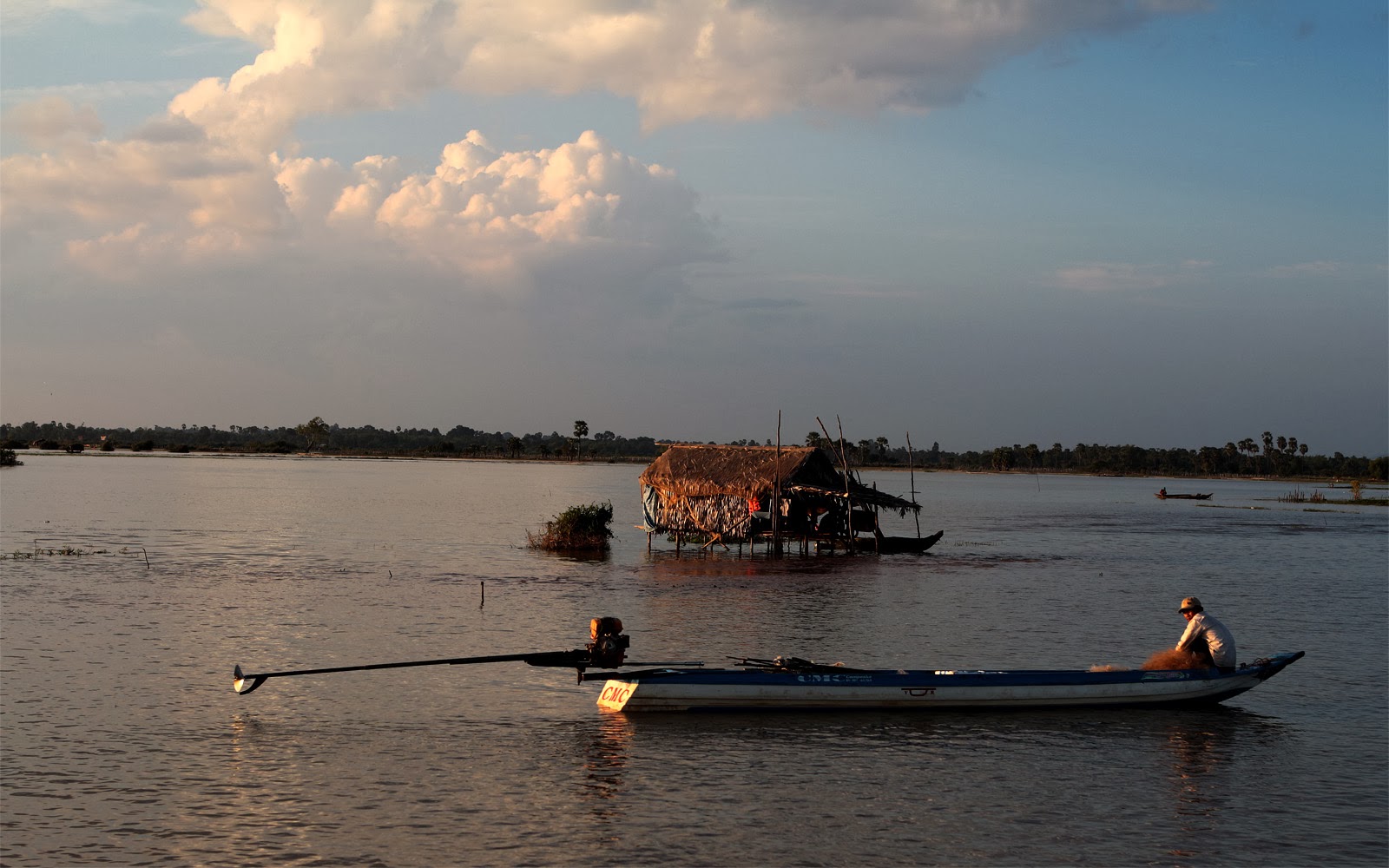
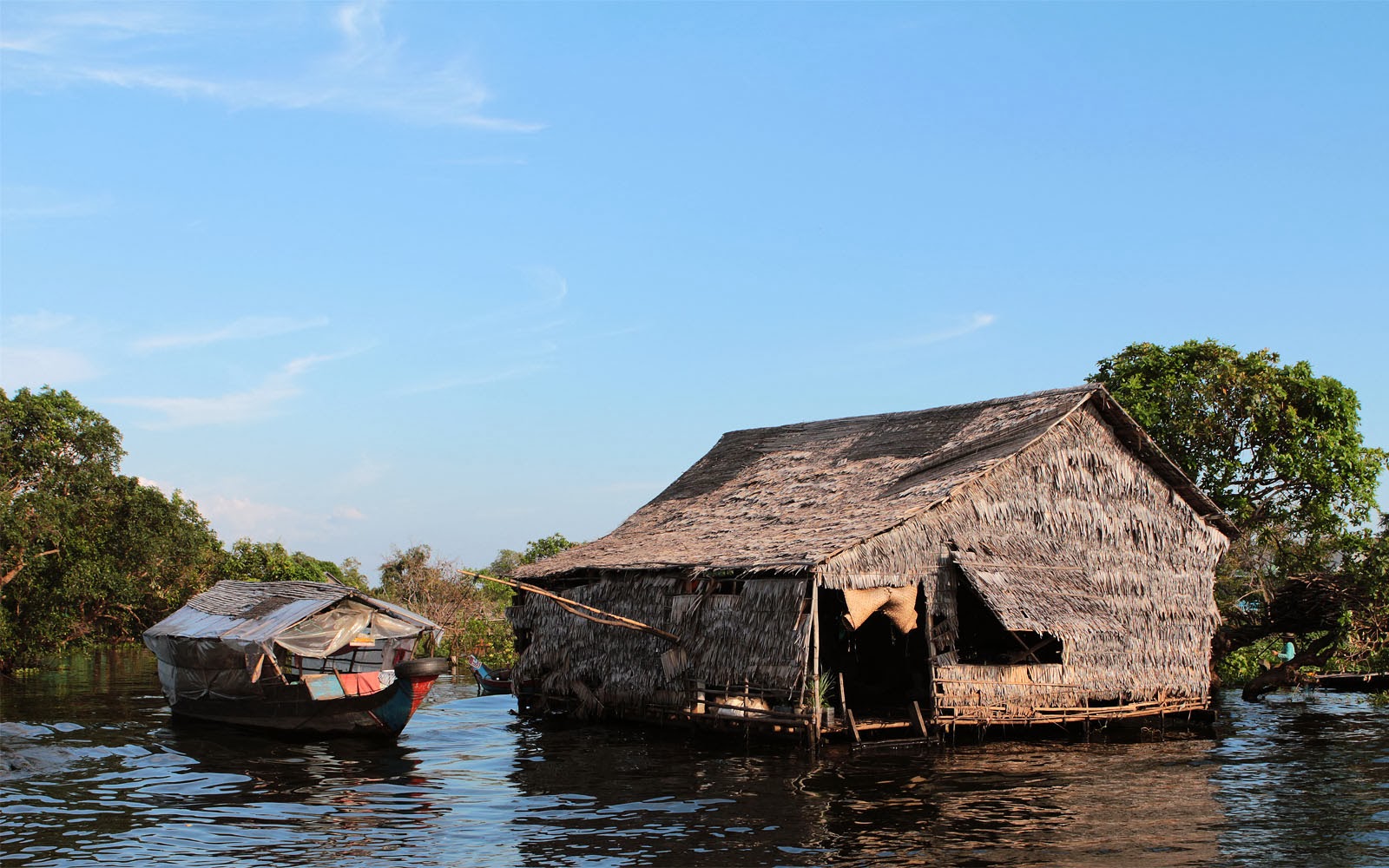
Siam Reap is home to the largest freshwater lake in South Asia called the Tonle Sap - its surface area grows to a stupendous 16,000 square KMs. The floating village built on this lake is a great tourist attraction. Even the school in this village is built in the lake and the students commute by boat.


I visited a silk factory. The notice board on the wall was interesting - it should give you an idea as to why silk cost so much.


The photo below shows the statue of Yama, the Lord of Death. To me there is nothing deathly about the look of the man.


This is the first time I saw a real “Stretch Limo” - I felt it was longer than a full bodied truck!


The photos below show the ancient textile weave of Cambodia. They look so much like our own. Infact, I suspect that they could be ours and not Cambodian - I know two experts and I intend to cross-check with them to see if they could be ours.


Friday, November 8, 2013

Bhutan and Cambodia: A Shared History?

Foreign travels are always educative provided, ofcourse, you keep your eyes and minds open. My recent unplanned trip to Cambodia was one such trip - I was confronted with something that puzzles me to this day.

One of the things we did in Siem Reap was to hunt for good and authentic Khmer food. Our third day search took us to a restaurant run and managed by the Foreign Correspondents' Club. The food was nowhere near being authentic Khmer - but it certainly was good - I enjoyed it thoroughly.

As we were coming down the staircase, I saw a handicraft shop to the right of the landing that had some interesting items on display. I walked into the shop - not to buy but to see what the items were.

On one of the shelves was a piece of antique textile that resembled so much like our own. I took a closer look ….. yes! there was no mistaking it … it had an uncanny resemblance to one of our own textile called Chagtsi Pangkhep. I know this because I recently completed an assignment for the Royal Textile Academy where I was required to photograph a huge pile of exhibits for a catalogue that was released during the inauguration of the new RTA building.


I am still intrigued - how come there is so much similarity between the textiles of Cambodia and Bhutan? The weave, the patterns, color scheme and even the frills look so exactly same. Is it possible that our textiles have their origins in those of the Cambodian or theirs in ours? So much similarity does not happen by accident!

Take a look - the one below is our own Chagtsi Pangkhep. I am told that we use to use ours as hand towels.


Bhutanese Chagtsi Pangkhep

The one below is the Cambodian one … the manager of the shop told me that they use theirs as wall hangings.

Cambodian Wallhanging

The implications here are serious. If what I suspect is true ... may be we have some Khmer Rouge blood running through our veins!

Wednesday, November 6, 2013

Siem Reap and the Buxom Apsaras of Ancient Temples of Angkor, Cambodia

On October 30, 2013 I flew into Singapore Changi Airport and within 45 minutes of landing, I was propped up on the dentist's chair getting my gums inspected for the dental procedure that he had started more than two months back. An hour or so later, the good doctor announced that I would be required to visit him atleast five times before he would be done with me. He fixed our next tryst for Monday the 4th of November, 2013 and the third one on Wednesday the 6th November and so on and so forth.

Well, that is all fine ... but what the hell do I do in between the appointments? I mean it is not as if I am visiting Singapore for the first time - I have visited the island city atleast 50 times since I first visited it in 1979. My friend KTJ who picked me up from the airport and who was with me at the doctor's chamber came up with a suggestion that I simply could not refuse - he suggested that I join him and his family on a trip to Siem Reap, Cambodia. He was scheduled to leave the next day. I gladly accepted the offer - knowing that the ruins of the fabulous Angkor Wat temples were located in Siem Reap. By the way, "Siem Reap" means "Siamese Defeated" - audaciously referring to the defeat of their Northern giant neighbor - Thailand who ruled Cambodia for few centuries.

The ruins of the temples of Angkor Wat and Bayon took my breath away. The grandeur is simply monumental - it beats anything else anywhere in the world - except perhaps, I am told, Macchu Picchu or Petra. I thought the Forbidden City in Beijing was a marvel - not by a long shot! Not compared to these colossal ruins some of which date back to the 7th Century.

In the coming days I will be posting lots of photos of my visit to Siem Reap but for now I would like to start off the narrative by posting something that should be worth a few laughs.


The bas-reliefs on the walls of these enormous temples are something to be seen to be believed. They are exquisite. As I went about photographing them, I suddenly noticed that one of the images that I had captured was that of a wall figurine of an Apsara (heavenly nymph). Her face and bosom (and not the rest of her body) were fondled to a glossy shine. How did that happen? - particularly when there were numerous noticeboards that prohibited visitors from touching the bas-reliefs.

Puzzled, I pulled my friend KTJ away from his wife and daughter and showed him the photo. I asked him in a hushed voice;

"Why is the Apsara's bosom so shiny as if people have been fondling them?"

"So? What is strange about that?" He asked.

"Hey .. you do not really mean ..???" I was shocked.

"Come on, where got women with three heads in Cambodia?"

"Women with three heads?"

"Awwwww come on buddy... didn't you notice? Women in Cambodia have only one head: upstairs.. the smaller two further down are missing".

"So?"

"So the Cambodian men come here to Ankor Wat and fondle the Apsaras to get a sense of how a woman with three heads feels like"; he said with a wicked smile.

Before I could question him further, his wife and daughter pulled him away to show him the bas-relief depicting the Churning of the Ocean of Milk to extract the elixir of immortality.

Thursday, May 2, 2013

Kabney & Patang

The triviality to which the Kabney and Patang have been subjected to by some people in the aftermath of the dissolution of the first Parliament of Bhutan is most unfortunate. The donning of the Kabney and the Patang is governed by a rigid set of rules that is a part of our living culture and tradition. Other than as an act of affront, no person who has been awarded the Patang and Kabney may disrobe himself of the Kabney or the Patang as and when he pleases.

Symbolism
The Patang symbolizes authority and the Kabney denotes honour. Only the Druk Gyalpo bestows both these symbols of authority and honour upon the wearer. Thus, other than the King himself, no authority or institution has the power to order the disrobing of a legitimate recipient of these regalia. Since an honour conferred by the King is for life, the recipient wears the Kabney until the end of his life. However, since the Patang symbolizes authority, the wearer is required to relinquish it upon retirement from active official duty - when his authority ceases.

One of the seventeen Committee Members who authored the manual titled “DRIGLAM NAMZHAG” said that the Kabney and the Patang is so important that in the past, the death of every Nyi-Kyelma had to be reported to the King. Along with the report, the following items - known as ZHIDOE - belonging to the deceased had to be submitted to the King:

..   Bura Namza (Kabney)
..   Patang
..   Gho
..   Ptitala
..   Jandom
..   Phechung
..   Zhecha: Set of 2

The Dress Code

The wearing of the Gho, Namza (Kabney), Patang, Tshoglham and the Losil are all explicitly defined - for each rank: Minister, Deputy Minister, Nyi-Kyelma and the Royal Advisory Councilor. The manual titled “Driglam Namzhag” defines the following dress code for officials of the rank of Nyi-Kyelma and above:

Minister
The Minister’s Gho should be drawn up just below the knees. His Lagyen should be folded up one Tho and his Tego collar folded down two fingers width. The color of the Tshogyug can be any color. The Tshonglham Kor must be either light red or orange in color. The Kabney must be orange in color and should be twenty one Tho in length and six Tho in breadth. The left end of the Kabney must be folded into seven folds and drawn over the left shoulder. The end of the Patang must protrude a little below the Kabney. During an audience with the King, it is not permitted to place the hand on the Patang or over its handle.


Deputy Minister
A Deputy Minister must wear his Gho at knee length and the Lagyen should be folded up one Chatho. The Tego collar must be folded one Sor. The Tshogyug can be any color. The Tshoglham Kor must be light red. The sword must be worn on the right and the Losil on the left. The Kabney must be twenty one Tho in length and five Tho in breadth. A Deputy Minister is not entitled to the fold in the front of his Kabney like that of a Minister.


Nyi-Kyelma and Royal Advisory Councilors
The rights and privileges of the Nyi-Kyelma and the Royal Advisory Councilors are the same as those of the Deputy Minister but a Nyi-Kyelma will wear red Kabney while the Royal Advisory Councilors will wear blue Kabney. The color of their Tshoglham Kor will be red.


All the three Illustrations above were reproduced from the manual titled "DRIGLAM NAMZHAG"
   
Written Rule/Oral-Historical Record
In the absence of a written rule concerning the Kabney and the Patang, every one seems to want to put out a theory - most often, one that fits in with their own agenda. Because it suites their purpose, they chose to ignore the oral traditions and the historical records that should provide them with pointers on how to behave like cultured members of the Bhutanese society.

It is not entirely true that there are no written rules governing the Kabey and the Patang.

In its DRAFT version, "The Parliamentary Entitlements Act of the Kingdom of Bhutan, 2008" attempted to rationalize the issues surrounding the Kabney and the Patang but was excluded from the final version on the grounds that a separate discussion on the matter was needed. More likely, the item (proposed as Article 24 in the Draft Act) was removed from the final Act because the proposed Article undermined certain provisions contained in the Constitution.

The “Rules & Regulations of the Royal Advisory Council, 1993” which came into effect as of 1st August, 1993 has the following Provision:

CHAPTER V: TERM, RESIGNATION AND TERMINATION

5.6   On retirement or resignation, a Councillor is allowed to

        wear blue kabney without patang.

The above rule clearly proves that since the Kabney and the Patang was granted by His Majesty the King, in keeping with the custom and tradition, a retired Councilor was allowed to continue to wear his Kabney even after his term of office was over.

A Resolution of the 81st Session of the National Assembly states as follows:

3. Driglam Namzhag, National Dress and Culture

The National Assembly resolved that any civil servant who has been awarded Patang and Kabney by observing Phuensum Tshogpai Tendrel prior to the 81st session of the National Assembly can continue wearing Patang and Kabney even after their transfer to any other government organizations.

The National Assembly resolved that henceforth Patang and Kabney awarded other than by the His Majesty the King, specially designed to identify the position of the officers of the Dzongkhag Administrations, Judicial Courts and Dungkhags could be worn only during the occupation of such posts and should not wear if they were transferred to different ministries, departments and organizations.


There is absolutely no ambiguity in the above National Assembly Resolution. The Kabney and the Patang NOT awarded by His Majesty the King but were worn to distinguish different positions of the officers serving in the Dzongkhag Administrations, Judicial Courts and Dungkhags should be relinquished once they move out of these organizations.

In my understanding, there is no confusion - all those who received their Kabney and Patang from His Majesty the King should be honoured to continue to wear the Kabney - sans the Patang.