Showing posts with label Lifestyle. Show all posts

Sunday, August 18, 2019

Do You Know your Ema?

We Bhutanese pride ourselves as a nation of Ema Datsi. We eat chilies for breakfast, lunch, dinner and snack on it at odd hours. But how much do we really know about this hot stuff that ranks as our most favorite item of food? We are so desperate for chilies that we unfailingly smuggle in chilies during our overseas trips - even while fully in the know that we could be fined heavily, if caught with the hot stuff. Shortage of chilies in the country is a national crisis - we can be driven to such desperation that in 2017, the erstwhile PDP government imported chilies by Druk Air.
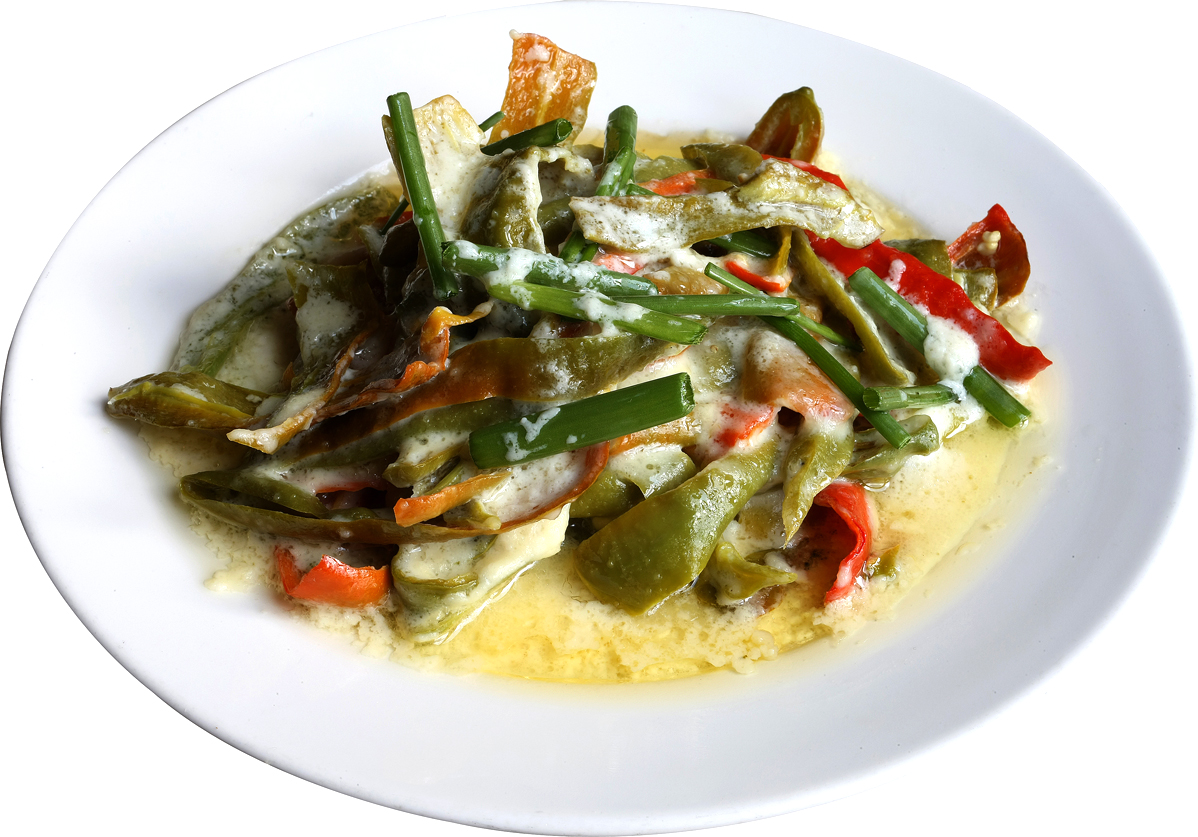
Druk Hotel's Chef Kundu's Ema Datsi prepared from green chilies

I suspect that we consume over 14,000,000 KGs of chilies a year. And yet, until about a year back, we were talking of importing 200 truckloads of chilies from India. The situation has now improved and we are more or less self sufficient in chilies.

During the chili season, even open fields are taken up for drying chilies

There are over 2,000 - 3,000 chili varieties cultivated around the world, in addition to the wild varieties. How many varieties do we grow in Bhutan? No idea – but the following are what I have seen in Thimphu Centenary Farmers’ Market. Unfortunately I do not know the names. Perhaps some readers could fill in the names of these varieties. The only thing I know is that more chili varieties seems to be grown in the Southern parts of the country, compared to the Northern parts.


This is called Dulley Khorsani - one of the hottest varieties originating in the South of the country


 This variety of chili grown in the North of the country seems to be the chili of choice for preparing Ema Datsi


Pakshikha Ema - This chili variety comes from Pakshikha, Bongo Gewog. They claim that this is among the hottest and tastiest of all chili variety found in Bhutan

Some chili varieties arranged in order of size

Generally only ripe red chilies are sun-dried. After drying, they come to be known as Ema Kam

Urca Bangla from Trashiyangtse

We Bhutanese like our chilies in a variety of shapes, sizes and forms:

Ema Shukam - Green chilies - boiled and sun-dried

Ema Hokam - tender, whole green chilies sliced open and sun-dried

 Ema Kam - Solid red, ripe chilies sun-dried whole

 Epchi - dried red ripe chilies pounded and pulverized

The Americans do not consume chilies – but they produce the most famous chili sauce called the “Tabasco Pepper Sauce”. The McIlhenny Company of Avery Island, Louisiana, USA produces and ships over 700,000 bottles of the hot sauce every day to over 200 countries. It is a business worth over US$200 million a year. That is Bhutan’s annual tourism revenue!

Tobasco Chili Sauce : America's gift to the world

America is also the land where you can buy one of the world’s very few wines made from - yes, you guessed it - CHILIES! Wine maker Shannon Johnson of Peaks of Otter Winery & Orchards, Virginia, USA produces a unique wine named “KISS THE DEVIL”. All of 30 varieties of chilies go into brewing this wine – with alcohol content rated at 11%. 

Chili the king of all spices is ofcourse used for none-culinary purposes as well. The Reuters once reported that the Chinese Police feed them to sleepy motorists - to keep them awake.

A recent study revealed that liquid spray made from chilies is most effective at warding off grizzly bears.

Spray made from chilies is most effect at warding off Grizzly Bears

Sunday, July 17, 2011

A Page Out Of A Bygone Era

I was young and I was impressionable. It was a time when the skimpy “choosh” pants were being edged out of the closet by the silo-sized “GOGO” pants that became the rage of the day. It was “stylish” to sport an unruly, long and wildly flowing hairstyle known as the “Jesus cut” - not the sleek, pony-tailed type that the present-day aficionados prefer. One of the things that was in vogue those heady days was to be seen to be outlandish, nonconformist and something of a weirdo. The highest form of fashion sense was when you dared show a bit of your bottom peeping out of the opening that you intentionally slashed into your jeans. I was too much of a traditionalist and so I wasn’t into all that. But in keeping with the times, and to demonstrate my superior sense of sophistication and taste, I bought myself this utterly meaningless book titled “Book of Nothing”. A man-about-town had to be owning something funky and groovy. And, this book was simply far-out!

It was a regular A4-sized book, immaculately bound with its title exquisitely embossed in a text that exuded class and refinement. Inside, it contained pages upon pages of beautifully textured paper of the highest quality - containing absolutely NOTHING - except for a single short sentence at the bottom of each sheet - printed in the minutest print possible, resembling that of a insurance policy fine print that promises you nothing for everything. The small prints at the bottom of each of the pages read something like: “Nothing for nothing” or “It is very difficult to do nothing” or “You get nothing for nothing” etc.

On Sunday afternoons, I would take the book to such chic places as the Flury’s in Kolkata, select a corner table that is the most brightly lit among all the tables in the great hall - for visual effect. The measure of your standing is judged by how promptly a waiter presents himself to serve you. Any one needing to raise his hand or holler for the attention of a waiter is looked upon with pity and disdain. Having invested a substantial sum in generous tips during my past visits to the establishment, waiters jostled and scrambled to attend to my table. The most nimble-footed would edge out the rest and approach my table and, with supreme congeniality ask me, in usual formality; “Your usual, Sir?”

My “usual” would be a pot of fine Darjeeling tea and an assortment of pastries. While the waiter disappears into the back room to fill in my order, I would pull out my Book of Nothing and make a suave, visual survey of the great Flury’s tearoom - to see if there were any one who I recognized. Even if there were, a knowing smile and a gentle nod of the head were all that was needed to acknowledge his/her presence. Anything beyond that was considered unsophisticated and inferior.

As the waiter begins to fawn all over me serving tea and laying out the pastries, I would begin my great act of reading the book with undistracted attention - unhindered by the clang and clatter of the cutlery of a great mass of people having their afternoon tea. To complete the show, my eyes would be strained with intense concentration at the blank pages of the Book of Nothing. Occasionally, an acquaintance would pass by my table and seek my permission to flip through the blank pages of the book and utter some words of appreciation such as; “Ah .. so refreshingly different and … umm … unique” - to demonstrate his/her own level of sophistication and worldliness.

The next sophisticated thing I did was to buy myself a largish, black and white, horizontally oriented comic book titled “The Fillipino Food”. During a period when quaint little comic books with prim and proper characters right out of the Mills & Boon classics were the order of the day, this comic book was filled with morbid graphics of an energetic hero brandishing a gargantuan syringe in place of his manhood. While he himself experienced a star-spangled orgasmic release, the person whose arm he poked with his syringe shriveled and died away. On one of the sixty odd pages of the book, a woman was shown lying on her back with her legs spread wide open and a TV screen in place of her Kesang Buthri. On it was depicted the cosmic mandala, the Milky Way and the gateway to the heavens. All these abstract renderings were totally beyond my sophistication and intellect - finally exposing me for the country bumpkin that I really was.

One portrayal in the comic book that remained etched in my mind over the years is its depiction of the human race sprouting out of an old, stinking tennis shoe. I clearly understood and commiserated with this uncommon theory. That is why, perhaps, the human race, even after so many centuries of continuous evolution, still secretes the stink and the stench of its place of origin.