Showing posts sorted by relevance for query RTI Act. Sort by date Show all posts

Friday, June 1, 2012

Do We Need An RTI Act?

-->The 2-days seminar/workshop on RTI Awareness organized by the Department of Information & Media, Ministry of Information and Communications concluded yesterday. I participated in the seminar not so much because I needed to know more than what I already knew about the benefits of RTI Act. I did so because it presented me with an opportunity, a platform, to make a statement - without any ambiguity - that Bhutan is not ready for the RTI Act.

The gaggle of notable speakers from around the world had one common message: that Bhutan is in absolute dire need of an RTI Act and, in their view, we need it TO-DAY, not tomorrow.

Let me assure you that the lineup of speakers at the seminar was impressive - each of them were articulate, well spoken, fluent and very knowledgeable. I was thoroughly impressed by the vastness of their experiences. I know too that they were very sincere in their good intentions for Bhutan. They truly believed that they had a very important message for us.

All that is fine, except that there is one minor detail we must not forget: the fact that all of them come from cultures that are vastly different from our own. The maturity of our democracies is at two opposite ends of the pole. The realities that exist in their countries are different from those that exist in ours. And, MOST IMPORTANTLY, we do not share a common history; a history that most often direct and shape our future.

They come from countries that have long and painful history of colonization, of deprivation, of subjugation, corrupt politicians and failed governments. That is why, during the course of the debate, I asked them a simple question:

How are their experiences relevant to us?

We are a nation of less than 700,000 people. There are hardly any secrets in Bhutan. In fact, because of our compactness, transparency is a national embarrassment.

Our Constitution already guarantees us our right to information. What additional rights or freedom can an RTI Act offer us?

Persistently, the panelists collectively insisted that the RTI Act is most often the result of DEMAND FOR INFORMATION. I pointed out that if that were true, as far as Bhutan was concerned, there is only one, repeat, only one recorded history of demand for information - that of Hon’ble National Council Member, Mr. Sangay Khandu. Can a law be considered for enactment based on one solitary demand? Ofcourse, there were a few articles written by the media extolling the virtues of the RTI Act. But the media’s demand for RTI Act is inconsequential since every one of us know that their interest in it constitute a very serious conflict of interest.

One other question I asked the panelists at the seminar was this: why did a great country like India with a few million brilliant minds take 56 years to enact their RTI Act – from the time they got their Constitution? One of the Indian speakers put the blame squarely on their politicians. That was very unfair. On the contrary, my view was that the Indian people were very wise because of which they gave themselves that many years to understand the issues involved, engage the public to debate on it, deliberate on each of the clauses of the proposed Act, understand their implications, so that, when finally they enact it, they have a well thought out and enforceable law that would benefit the common people.

I am not suggesting that Bhutan take 56 years to enact an RTI Act. But certainly, we can allow ourselves few years to work on it, allow our democracy to mature, our people to understand their responsibilities that come with the freedom that they have been given under the democratic system.

I also opined that it was simple to enact a law but very, very difficult to enforce it. I suggested that Bhutan must first work towards creating the enabling conditions in order that the delivery and application of the RTI becomes possible. Given the poor state of our record keeping and the level of ICT knowledge and implementation, enforcing the Act will be near impossible, regardless of our lawmakers’ very best intentions.

I pointed out to the resource persons that out of the 241 countries, only 86 countries enacted RTI Act, as of 2008. More than 60% of the countries did not adopt the law. Why? By the way, one among those counties that does not yet have an RTI Act in place is: Singapore. And we know that Singapore is one of the world’s most dynamic countries.

As I mentioned at the beginning, the experts believe that we need the law NOW. I disagree with them totally. We are not ready for it now. Every educated individual is in no doubt of the empowerment the RTI Act will give the common man. However, its relevance and usefulness is a matter of timing. We need to understand the mindset of the people who will be seeking the information and those of the present set of people who are holding the information. Will the giver give willingly? Will the seeker seek responsibly?

In conclusion, it is my view that the experts’ need for haste is driven by their paranoia and a dread of their own past. Bhutanese people have no such baggage.

Sunday, September 1, 2013

My Comments On The Proposed RTI Bill

His Excellency the Prime Minister has sought comments on the proposed RTI Bill that is due to be tabled during the upcoming Parliament session. It is my belief that Bhutan is not ready for the enactment of the RTI Bill. Thus, instead of discussing the clauses which I have not even read, I choose to offer a contrarian view as follows, which I have posted on the Prime Minister's Blog (http://www.tsheringtobgay.com):
------------------------------------------------

Your Excellency,

As a concerned citizen and in an effort to help the government and the Parliament to look at the practicality and usefulness of introducing/enacting the RTI Bill in the upcoming Parliamentary session, I would like to offer my following views on the issue.

When a certain Bill or Act is considered for introduction in the Parliament for discussion and final enactment, it comes about because there is a NEED for such a Bill or Act. Therefore, the first question to ask is:

IS THERE A NEED FOR SUCH AN ACT/BILL?
>  How did the need arise?
>  Was information denied?
>  What percentage of the Bhutanese population desires the RTI Act?
>  What do they understand about the benefits of the RTI?
>  Will it improve transparency and impartiality?
>  Is there a popular demand for the Bill from the people of Bhutan?
>  Was the requirement for such a Bill discussed among the people and does it

    find popular appeal among the respondents?
>  Most importantly, which segment of the Bhutanese society will the RTI Bill benefit?

Bhutan has too many laws that most even do not know they exist. Most often, we enact laws that we are unable to enforce - in some cases we have even failed to fix responsibility as to which agency should enforce those laws. It has also happened that some of our laws are donor driven and not necessarily appropriate to the times we live in. We enact laws simply because they look good on paper and render some bit of statistical opulence in the eyes of the visiting consultants. As a result, laws continue to be broken, ignored and unenforced - resulting in the famous Bhutanese lackadaisical attitude towards law.

During end May, 2012, the Ministry of Information and Communications held a two-days Awareness seminar on RTI at Terma Linca - where I was a participant. Strangely, the tone of the seminar bordered on RTI activism - a far cry from being a seminar about imparting awareness on RTI. I was aghast at the fact that one of the resource persons was a well-known RTI activist! The entire two-days seminar emphasized the urgent need to enact RTI Act in Bhutan. I was the lone voice in that seminar opposing the visiting experts and their view that Bhutan is in urgent need of RTI Bill - to the point that during lunch break the World Bank representative offered to console me by saying that the seminar was fortunate to have my negative voice - to which I responded that notwithstanding the voices of the activists, as far as Bhutan was concerned, mine was the positive voice.


I bring up this issue because we need to answer one question truthfully:

Is the government and the proponents of the RTI Bill convinced that there is a genuine need for RTI in Bhutan? Who is demanding it? How many citizens are suffering as a result of lack of RTI Bill? Do stray incidences of denial of information warrant the legislation of a law the implications of which few are able to comprehend? Or, are some interest groups driving the RTI movement in Bhutan?

To be perfectly frank, I am wary because of the involvement of some outside organizations who are trying to decide that the RTI is good for Bhutan - without first allowing the Bhutanese people to understand if it is right for us. I request that the Parliamentarians exercise utmost caution in yielding to their pressure because only Bhutanese can determine what is good for us. They are driven by their own agenda - do not let them convince us, as opined by one of the resource persons during the awareness seminar under reference, that the window of opportunity is only minimal. As long as we have the political will and as long as we are ready for it, the window of opportunity is boundless.

The following are my views:

There are 196 countries in the world. Of that many, less than half - 93 countries to be precise - have so far adopted some form of RTI.

India became independent in 1947. Since then, she has taken 44 years to start the RTI movement in 1990. Thereafter, they debated the issue for 15 years - and RTI became law only in 2005.

So what is the hurry for Bhutan? We are not even 6 years into Constitutional Monarchy. Even more important, we are still in a state of confusion as to what constitutes freedom and what our responsibility is, in the exercise of that freedom.

Assurance of RTI goes beyond merely enacting a law - the delivery mechanism should be put in place before the law is enacted. This means that when information is sought under the law, information must be available in a deliverable format and at locations that are readily accessible. Do we have that? If not, how will the law work?

Therefore, to me it seems like the first order of things is to discuss in the Parliament not the RTI law - but feasibility of the creation of institutions and manpower and infrastructural set up to prepare for the enactment of the RTI Bill. If not, it will be a case of putting the cart before the horse. If the law is to be effective and useful, we have to first create the environment for it to be implemented and enforced. Thus, we should begin by first getting the Parliament to approve, if parliamentary approval is required, to establish the necessary infrastructure and manpower to assimilate the RTI culture among the people and the custodians of the information.

Appointment of IMO’s and support staff is the first step. Then comes their training in the use of specialized equipment to record, digitize, archive and retrieve the stored information. We have to decide on and standardize the medium of storage and retrieval system. We have to determine the most efficient method of gathering and compiling and encoding the existing information, which is mostly in hard copy, spread over the length and breadth of the country and stored away in files.

Creation of the facility as described above will require immense financial outlay. Do we have that? A budgetary allocation of anywhere from 200 to 600 million will be required - to train few hundred operators and IMO’s and to buy hundreds of devices for storage, scanning, microfilm, microfiche, readers, encoders, photocopiers, computers, printers etc. and software to implement them. Do we have that kind of money?

What about the legal aspect of the RTI Bill? Have we ascertained if our existing laws do not conflict with the spirit and the obligations of the RTI? What do we do – repeal/amend the existing laws to make way for the RTI Bill?

Given all the above, it is my view that we do not even look at the proposed Bill for now - but start by discussing the creation and affordability of putting in place the enabling conditions to assure the success of the RTI Bill - when it is finally enacted. If not, it will be one more law that is enacted but not enforced.

We have to remember that some laws are more effective when they are left ambiguous - then when they are enacted into law - with a hundred explicit clauses. My experience is that those well-meaning clauses can be used as a deterrent rather than as something stipulated to facilitate efficiency.

We Bhutanese are great hoarders of information - for how our mind works, please read my Blog article titled “RTI & The Bhutanese Mentality” posted on Thursday, April 7, 2011. It is filed under “Legislation http://yesheydorji.blogspot.com/2011/04/normal-0-false-false-false_07.html

Thursday, April 7, 2011

RTI & The Bhutanese Mentality

I recently read a news item in Business Bhutan that a SAARC Group of Advisors on RTI was formed. Supposedly, this group will act as an informal forum where member states will exchange information and experiences to enable them to legislate and effectively implement RTI in their respective countries. Proponents of the RTI Act argue that its legislation and adoption will eliminate arbitrariness and corrupt practices in the government and public and civilian authorities. Some discussion on this issue has already taken place in Bhutan and while its adoption may be delayed for a variety of reasons, it is inevitable that it will finally come to be adopted.

RTI is a complex issue. The extent and scope of the Act will differ from country to country. What will be covered and what will not be covered will depend on a variety of factors and situations prevalent in each country. Bhutan, for instance, is a Constitutional Monarchy and thus, the RTI will include certain clauses that other countries in the region will see as irrelevant and decadent. Also, geopolitical realities will be a determining factor in the inclusion or exclusion of certain clauses that may be relevant and yet pertinent to be excluded from a written Law. No question, RTI will be a complex undertaking.

But in my opinion, the most daunting complexity will be the Bhutanese mentality and the manner in which we treat information. This stark reality hit me a week back when I tried to uncover some historical facts about Lingzhi Dzong. As ludicrous as it may sound, our public officials have this tendency to be secretive, even of matters that they are explicitly required to disseminate and propagate to the general public. This tendency is not limited to the big bosses of the bureaucracy alone, but is prevalent even among the workers in the lower rung of the hierarchy.

The following three incidences - more than two and a half decades apart - will demonstrate just how daunting the task of implementing the RTI Act is likely to be.

FIRST INCIDENT: Sometime in the mid 80’s, the Department of Revenue & Customs published the first ever written taxation rules of the country. For the first time in our history, there was a written and clearly defined tax rates and duty draw backs. The Forward to the Rules was authored by Her Royal Highness Ashi Sonam Choden Wangchuck, who was then the Representative of His Majesty in the Ministry of Finance - the parent Ministry of the Department of Revenue & Customs. Her Royal Highness wrote that the rule book was an important document and that it was important for the general public to understand it and follow the rules contained in the book. Therefore, she hoped that the book would be widely circulated among the general public.

On the cover of the rule book, a cautionary note was inscribed in bold that read: STRICTLY CONFIDENTIAL.

SECOND INCIDENT: This incident occurs one and a half decades after the one described above. One of my friends from the US wanted to organize an archery match between 12 American archers and a like number of Bhutanese archers. The Americans had heard so much about archery being the national sports of Bhutan and how good we were at the sport. They would come to Bhutan for the match and would follow the Bhutanese format in all respects. In order that they could familiarize themselves with our rules and conventions, my friend asked me to acquire a copy of the Bhutan Archery Federation Rules and mail it to him.

I went to see the Secretary of the Bhutan Archery Federation in his office and made my request for the issue of a copy of the Rules, either free or on payment of a fee. After listening to me intently, he declared that the rules were STRICTLY CONFIDENTIAL and refused to give me a copy. I was dumb founded - how can rules and regulations that people are supposed to read and understand and adhere to, be confidential? Me and my American friend got so disgusted, we trashed the whole idea.

THIRD AND LATEST INCIDENT: The latest incident took place on 31st March, 2011. The posting of my photo on Lingzhi Dzong generated some vigorous interest on the historical background of the Dzong - who built it, when was it built, what was the purpose of building it etc. etc. So I began to hunt for information from various people and establishments that were likely to have some information on the Dzong. I spoke to 2 people from Lingzhi who are presently domiciled in Dechencholing. They had nothing to offer me. I then located the Lingzhi Gup who was attending a meeting here in Thimphu. He was clueless. I was then asked to contact Dasho Sangey Dorji of the DDC who offered some useful information derived from work done by late Lopen Pemala. Sangey Wangdi, Ex-Councilor from Dramitse suggested that I contact Lopen Kunzang Thinley, a prolific writer with the KMT publishers. He had nothing to offer but helped me reconfirm certain facts that I already possessed. I went and met Thimphu Dzongdah who is the administrative head of Lingzhi Dungkhag. He gave me the interesting input about how it was customary for the Dzong’s roof to be taken down every winter to prevent it being blown off by strong winds that batter the Dzong during the winter months.

Now, we do have a Cultural Division under the Ministry of Home and Culture. I decided that they surely ought to have some material on the Dzong; after all, they are supposed to be the depository for all information and material related to our culture and tradition. Upon visiting the office at lower Motithang, I was directed to meet a lady, the Head of the section being out of office - on maternity leave. This lady put me through a host of irrelevant questions but at the end, she implied that any information they possessed would be classified information and a national secret. I was aghast - a historical fact that concerns our culture being treated with secrecy? Damn! Either she was being ridiculous or the Division has no information whatsoever on the Dzong and she is trying to conceal that fact. Nonetheless, she took down my number and promised to call back after consulting her Head who was on maternity leave. Fives days went by and she still hadn’t called - so I posted my piece on the history of the Dzong on my blog without waiting for her to give me additional information. It is now eleven days since my meeting with her and she still hasn’t called me.

So, what do you think are the prospects that the RTI will work in Bhutan?

Saturday, January 7, 2023

Information Blackout

There cannot be any other explanation - the government has unwittingly admitted that they are doing something clandestine behind the backs of the citizens. If not, I cannot imagine why the government has any need or reason to be so secretive about things from the very people in whose interest they are supposedly doing whatever they are doing.
Shhhhhhh .... kept it secret!

Before the advent of parliamentary democracy in the country, the institution of Anti Corruption Commission (ACC) was conceived and established, as a body to combat and prevent corruption. This was timely and the perception that democracy is likely to usher in an era of corruption and misuse of power was not unfounded. However, their role was that of a sentinel - not a law making body. Nowhere in their mandate (at least in what is on display) is it written that law making is part of their function or role, other than to enact rules and regulations designed specifically to prevent and combat corruption.

The Law in the wrong hands

Creating the enabling conditions to legitimize concealment of information from the fourth estate and the citizens is the very antithesis to what is at the core of their functions: combating corruption through ensuring that affairs are conducted in a fair, just and lawful manner.

Hiding and withholding useful and pertinent information from the people can deprive them of their most fundamental right - the right to information sanctified by the Constitution. Withholding information can lead to miscarriage of justice - through ignorance of the real truth. It will cause policy failures because they are based on half-truths, or untruths.

The cascading effect of one faulty policy can result in a hundred flawed public perceptions - because the citizens’ perceptions are formed in an atmosphere of secrecy and concealment.

When Bhutan started the discussion on the merits and demerits of introducing the Right To Information Act (RTI Act) sometime beginning 2011, I was the lone voice - opposing its introduction, tooth and nail. I still believe that we are not ready for it - in spite of the occasional policy misadventures.

Please read my opposing views at the following:


The rule of the ACC ordering complete blackout of information to the fourth estate and the general public does not bode well for the country. It is creating an unfamiliar condition in which the people may be driven to clawing for something that they had received without contest, in the past.

The make of the Bhutanese DNA is wondrous 😝 - you do not want to wake the slumbering Lucifer lurking within the chromosomes.

Tuesday, September 17, 2019

RTI Act - What News Of It?

This morning I woke up to notice that some readers were reading my old posts from 2011 and 2013. It has always amazed me how and why certain readers chose to read some particular posts from the past. I too went back to the two posts to see what was interesting about them. I came back satisfied that peoples' curiosity was justified - they are certainly interesting to read. Please read them at the following:

http://yesheydorji.blogspot.com/2013/09/my-feedback-on-proposed-rti-bill.html

http://yesheydorji.blogspot.com/2011/04/normal-0-false-false-false_07.html

The above two posts are related to each other - RTI Act. The other most visited post of mine is the post on Kabney & Patang. For some reason, people keep revisiting the post time and again, persistently. If you notice on the left side column, you will see that the post has yet again featured among the top 10 posts, although it is now 6 years old:

https://yesheydorji.blogspot.com/2013/05/kabney-patang.html

However, in terms of visitor visits, the following are the chartbusters:


Tuesday, May 15, 2012

Too Much Unrestrained Freedom?

Recently, a large number of my friends and relatives around the country spotted me on BBS TV - bearing a microphone in hand and wildly gesticulating like a man possessed - making some speechless points!


A friend commented that I was so driven by emotion that I was dumbfounded for words. Another smart Alec opined that I was a masterful shadow-boxer. However, the best comment came from my dad who too had seen me, for a fleeting moment, wordlessly making some points on BBS TV. Apparently, he had called up my sister to ask if I was joining politics. A mute politician? Preposterous!

You might wonder why I am suddenly the center of so much attention among my friends and relatives and why such a huge ruckus is being kicked up about my mute appearance on the BBS TV. The reason is that I was invited by the Bhutan Center for Media and Democracy to be on the panel that was discussing: Freedom of Media. How is freedom of the media understood in Bhutan, how do we fare in terms of free speech? What about our regulatory environment?

I had made some very scathing remarks against the media as a whole, how they had so far failed to live up to their enormous responsibilities as the Fourth Estate. How most of our young reporters are forever stuck in that state of infanthood. How, even after so many years, they are not being able to mature into responsible, committed and passionate custodians of the nation’s conscience. How some of them have usurped their right to free speech by being irresponsible and damaging in their reporting.

I had also touched on the subject of the RTI Act being proposed as a knee-jerk reaction arising out of some hurt ego and whether we have evolved enough to fully understand the responsibilities that come with freedom and whether we are mature enough to understand and respect the enormity of the empowerment that the RTI Act can give us.

I had also reminded them that if they were not getting the information they seek from government agencies, it was because they antagonized the source of the information and that they lacked tact and skill in handling prospective sources of the information they seek.

I had categorically stated before my talk that being critical was not being negative. I am on record (the entire proceedings were being tape recorded and video filmed) where I had pleaded with the media to be more responsible and not to add bewilderment to the already confusing state of affairs as a result of our lack of experience in a brand new form of governance.

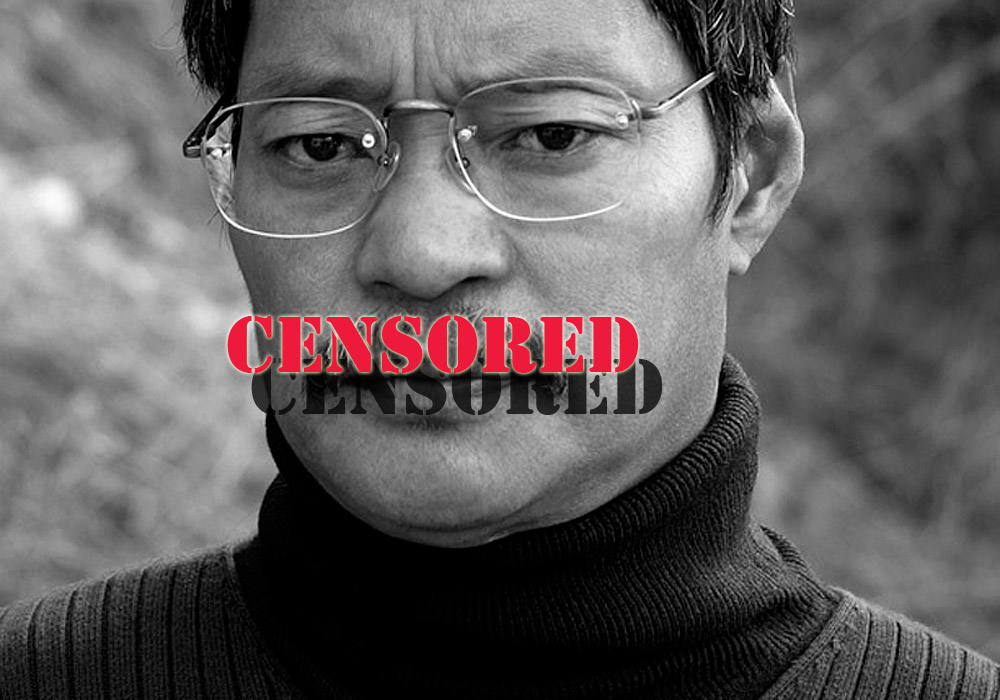
It is obvious from the way my words were censored and muted by BBS TV, that my opinions were not well received by the media. That is fine but that kind of behavior throws up a very serious question:

How can the media in Bhutan grow into a responsible public apparatus if they can silence and moderate opposing and uncomplimentary views about themselves? Who then regulates them? Is the current state of affairs among our media houses the result of too much unrestrained freedom?

Think about it.

Tuesday, April 12, 2022

Outlawing Making a Statement Of Fact, Or Expressing An Opinion

Something is terminally wrong with the Ministry of Agriculture, Royal Government of Bhutan. How can any one institution bungle so many times on so many issues?

Now they are once again in the news – this time for terminating their officers on the grounds – of all things – for breaching the BCSR’s Clause 3.3.16 that, according to the Kuensel reads:

“A civil servant shall refrain from making any statement of fact or opinion in the media (broadcast, print and online) or in any document, which may have adverse effects against the policies or actions of the royal government”.

I am not sure that the Kuensel has got it right – but if they did, then it seems like a case of shooting the messenger for the message.

I was muzzled by BBS TV for speaking the truth during a BBS group interview in 2012: https://yesheydorji.blogspot.com/2012/05/too-much-unrestrained-freedom-recently.html

Since when did it become illegal or an act of crime in Bhutan, for making a statement of fact or expressing an opinion? Notwithstanding what the BCSR’s Clause 3.3.16 reads, what does the Article 7.2 of the Constitution of Bhutan say about a citizen’s right to freedom of speech, opinion and expression?

You shall not speak the fact or express an opinion!

It is sad and perhaps I am proving to be wrong in having fought tooth and nail – the introduction of the Right To Information (RTI) Act in Bhutan. I fought because I was convinced – I still am – that we are a country where making a statement of fact or speaking the truth, or expressing an opinion is legitimized by our Constitution.


I know of not a single case where a citizen has been victimized for “making a statement of fact or opinion”. Why are the Foresters victimized just because the civil service wants to usurp the right of the individual, that is sanctified by the country’s Constitution?

I pray that justice and fairness will prevail so that those of us, who place our faith in the system, are encouraged to continue to do so.